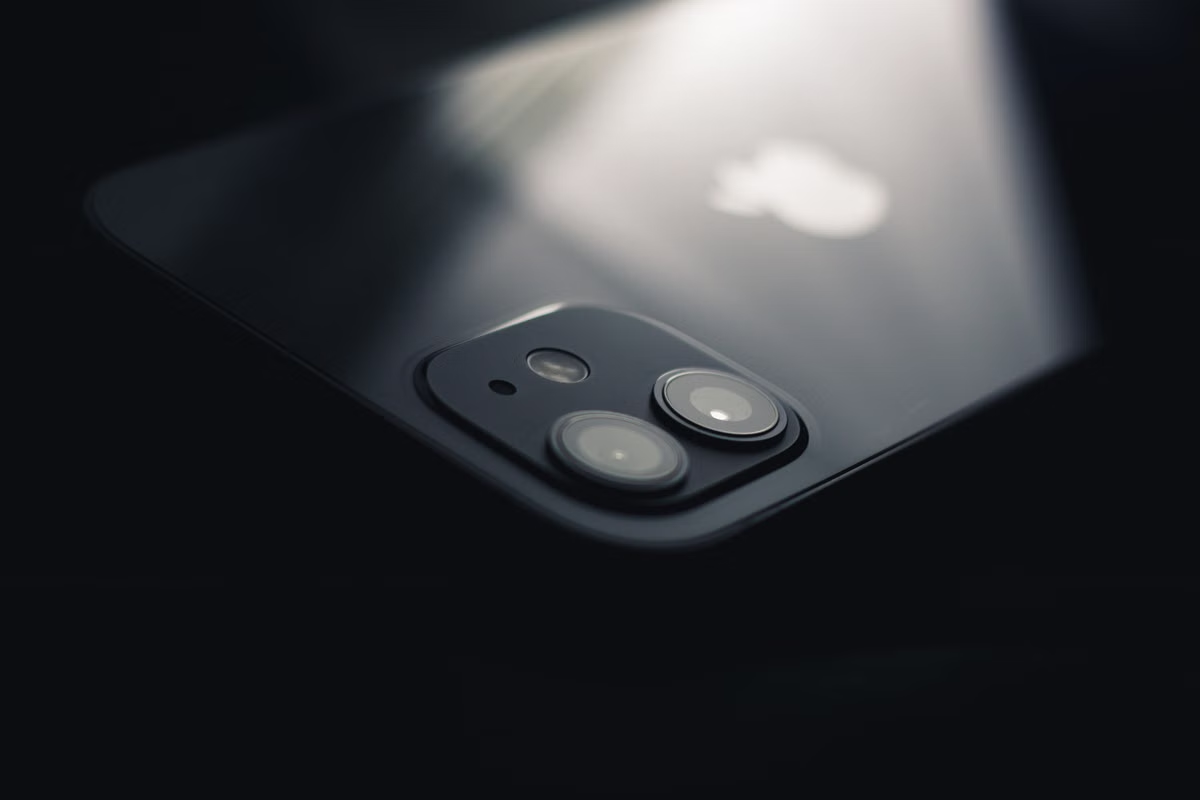
You are planning a Pro Max upgrade because your current phone struggles with long video shoots, sustained gaming, or a full day away from a charger.
The fastest answer: watch the variable aperture camera, larger battery, and A20 Pro first, but do not replace a working Pro Max before Apple confirms the hardware and independent tests measure it.
Who should read this
This guide is for creators who depend on phone photography, video production, and long-range camera work. It also targets developers running sustained games, on-device AI, or automated device tests.
If you own an older Pro Max and already feel a clear camera, battery, or performance bottleneck, the rumored iPhone 18 Pro Max upgrades may justify a closer look. If your current phone still meets those needs, wait for launch-week evidence rather than reacting to specifications circulating before the event.
Last updated: September 5, 2026. Information was checked against Apple’s event information, Apple’s iPhone 17 Pro announcement, and the dated rumor reports cited below.
Confirmed information and unresolved reports
As of September 5, 2026, Apple has not released the iPhone 18 Pro Max. The A20 Pro name, a variable aperture camera, a larger battery, and changes to Dynamic Island remain media or supply-chain claims, not confirmed specifications.
Apple’s developer event page lists the September 9 event that should provide the first official confirmation of the next iPhone generation. Until then, treat every camera, battery, display, and modem detail as provisional rather than as a purchase specification. Apple’s event information is the appropriate source for the event itself.
The current reference point is the iPhone 17 Pro and iPhone 17 Pro Max announced by Apple in September 2025. Apple’s newsroom announcement provides the official baseline for the existing Pro design, A19 Pro platform, camera system, and thermal approach. Apple’s official iPhone 17 Pro announcement should take priority over comparison articles when a rumor conflicts with an already shipped feature.
Recent reports do not fully agree on whether the variable aperture system belongs only to the larger Pro Max or to both Pro models. Reports published around September 3 also differ in how they describe the front-facing sensor area and battery changes. MacRumors’ September 3 rumor summary and its feature ranking are useful for tracking those claims, but neither turns an unannounced feature into a confirmed specification.
Reminder: “Reported” does not mean “confirmed.” A rumor repeated by several outlets can still trace back to one original supply-chain claim.
What does the iPhone 18 Pro Max change for professional imaging?
The most meaningful possible upgrade is not a higher megapixel count. It is the rumored variable aperture camera. A variable aperture can alter how much light reaches the sensor and can also influence depth of field. In simple terms, a wider aperture can help in darker conditions and produce stronger background separation, while a narrower aperture can keep more of a scene in focus.
The optical principle is established. It is explained in Canon’s technical guide to aperture and depth of field. The unresolved question is how Apple would implement it in a compact phone camera and whether the effect would be available on the main camera only or across more than one lens.
For a creator, the practical value would appear in four situations:
- You need more control over subject isolation without relying entirely on computational portrait processing.
- You shoot products, food, or close subjects and want to change how much of the scene remains sharp.
- You move between bright outdoor scenes and dim indoor locations without changing devices.
- You record video where exposure transitions and focus behavior matter more than a single still image.
The main uncertainty is model availability. Some reports describe the variable aperture camera as a Pro Max advantage. Other coverage leaves open the possibility that both Pro models could share it. Tom’s Guide’s current rumor report presents the broader Pro Max rumor picture, while Macworld’s report on the 2026 iPhone line provides another account of the expected design and camera direction.
Advantages for imaging users
- More direct control over exposure and depth of field.
- Potentially better separation between optical capture and software simulation.
- More flexibility for video crews working in mixed lighting.
- A clearer reason to choose Pro Max if Apple makes the feature exclusive.
Limits you should expect
- A variable aperture cannot compensate for a small sensor in every low-light situation.
- The final effect depends on lens quality, sensor size, image processing, and video support.
- Apple may restrict the feature to one camera or selected shooting modes.
- Early samples may not reveal autofocus reliability, flare behavior, or exposure consistency.
If your work depends on camera-app compatibility, do not validate only the default Apple camera app. Test manual exposure, focus transitions, video capture, lens switching, background blur, and third-party camera APIs after the final hardware is available.
Variable aperture availability remains unresolved
You should assume exclusivity is possible, not confirmed. This is one of the most important conflicts in the current reporting because it changes the buying decision between the two Pro models.
If only the Pro Max receives the mechanism, the larger phone becomes more than a screen-and-battery choice. It becomes a camera-system choice for users who need optical control. If both models receive it, the Pro Max case will depend more heavily on endurance, telephoto behavior, thermal capacity, and handling.
Do not infer exclusivity from leaked renders or a single component report. Wait for Apple’s launch specifications, then verify the following:
- Which rear camera contains the adjustable aperture.
- Whether still photography and video both support it.
- Whether third-party apps can access the control.
- Whether the smaller Pro has the same lens and sensor combination.
- Whether the feature is available in the camera modes you actually use.
This matters for a media team buying several devices. A mixed fleet can become difficult to test if two apparently similar Pro phones expose different camera controls. Before ordering, record the required camera capabilities in your acceptance document instead of approving devices by model name alone.
A20 Pro and sustained workloads
A20 Pro is expected to be the performance-focused part of the iPhone 18 Pro Max story, but its name and final architecture remain unconfirmed. Reports connect it with a more advanced manufacturing process and improved efficiency. That direction could matter more for sustained workloads than a short benchmark peak.
The iPhone 17 Pro Max and its A19 Pro platform are the correct official baseline. Apple’s published announcement should be used for confirmed platform and thermal claims, not a pre-release performance estimate. The rumored A20 Pro should therefore be evaluated through sustained behavior:
- Does frame rate remain stable after extended gameplay?
- Does the device reduce performance sharply when the chassis warms?
- Can an on-device AI task run repeatedly without excessive battery drain?
- Does background scheduling interrupt a test or automation workload?
- Does the modem maintain stable network performance during heat buildup?
A newer process can improve the balance between performance and power, but it does not guarantee a specific frame rate, battery gain, or temperature. Cooling design, display brightness, game engine behavior, radio activity, and iOS scheduling all contribute to the result.
For developers, the likely benefit is a larger testing envelope rather than a simple benchmark number. You may be able to run longer inference loops, repeated builds, or graphics tests before thermal behavior changes. That still needs measurement on production software.
A remote device lab can help you compare the new phone against the existing fleet without immediately retiring older devices. When planning access, review Kvmjet’s infrastructure information and ask for the exact device, operating-system version, connection method, and usage limits before treating a remote test as equivalent to a local handset. If your team needs to clarify access procedures, session limits, or device handoff before testing begins, use the Kvmjet help center to establish those requirements in advance.
Could the larger battery solve all-day travel problems?
Reports suggest that the iPhone 18 Pro Max may receive a larger battery, potentially alongside a change in body thickness. The direction is plausible, but the capacity itself remains unconfirmed. More capacity does not automatically produce longer real-world battery life.
Actual endurance depends on:
- Display brightness and refresh behavior.
- Cellular signal quality and modem activity.
- Camera recording duration.
- Game frame rate and thermal throttling.
- Background synchronization and location services.
- iOS power management.
- The efficiency of the A20 Pro platform, if that platform is announced.
A larger battery could help a traveling creator recording video away from a charger. It could also benefit a developer running repeated installation, logging, or automation sessions. However, a thicker body may affect mounts, cases, gimbals, and pocket comfort. You should evaluate the entire travel kit, not just the battery claim.
A simple travel test plan
- Start with a fully charged device and record the iOS version.
- Use the same brightness, network mode, camera settings, and background apps on both phones.
- Run your normal travel workload: navigation, messaging, camera capture, hotspot use, and media playback.
- Record battery percentage at fixed checkpoints.
- Repeat the test under weak-signal conditions and normal Wi-Fi conditions.
- Compare heat, charging time, and remaining capacity, not only the final percentage.
Experience-based warning: Battery capacity is an input, not an endurance result. A phone with a larger cell can still perform worse in a weak-signal area or during sustained camera recording.
Will Dynamic Island become smaller?
A smaller Dynamic Island or a relocated front-sensor arrangement is another reported iPhone 18 Pro Max change. The claim matters less for appearance than for layout testing.
If the sensor area changes, the affected elements may include:
- Full-screen video safe areas.
- Game HUD placement.
- Camera previews.
- Screenshot comparison baselines.
- Status indicators and live activities.
- Accessibility layouts and touch targets.
- Browser and web-app content that assumes a particular inset.
You should not hard-code coordinates from a leaked image. Apple’s safe area layout guide remains the correct implementation reference. Use system APIs and test the final device after the operating system exposes its actual insets.
For an app team, a smaller Dynamic Island can create both opportunities and regressions. More visible content may fit at the top of the display, but a changed sensor boundary can expose assumptions in screenshots, onboarding flows, and custom-rendered interfaces. Treat the change as a new layout condition, not as a cosmetic improvement.
Upgrade conditions for older Pro Max owners
The iPhone 18 Pro Max upgrades are potentially large for a specific user, but not automatically large for everyone moving from the previous generation.
Choose to investigate the new device early if:
- Your current Pro Max cannot complete a normal shooting day without power management.
- You need more manual control over exposure and depth of field.
- Long gaming or AI workloads trigger performance drops that affect testing.
- You are replacing an older fleet and need a new hardware baseline.
- Your applications depend on camera, safe-area, or sustained-performance behavior.
Wait for independent reviews if:
- Your current camera already meets your production requirements.
- Your battery problem comes mainly from poor cellular coverage.
- Your workload is short-burst rather than sustained.
- You do not need new camera controls.
- You are considering the phone only because of rumor headlines.
Use this decision checklist before launch:
- [ ] Write down the current camera, battery, and performance failure that justifies an upgrade.
- [ ] Mark whether that failure is optical, software-related, thermal, or network-related.
- [ ] Confirm whether the final Pro Max actually includes the rumored feature.
- [ ] Compare a production task, not only a synthetic benchmark.
- [ ] Test your oldest supported device alongside the new model.
- [ ] Keep the existing Pro Max in regression coverage until the new phone passes acceptance.
- [ ] Delay fleet replacement if the benefit is visible only in specifications and not in your workload.
For a development team, the safest buying approach is staged adoption. Obtain enough devices for launch validation, preserve the previous generation for regression, and expand the fleet only after camera, network, battery, and sustained-load results are stable.
First-week validation priorities after launch
Start with four validation tracks rather than a broad list of unconnected specifications.
1. Camera samples and controls
Capture identical stills and video in bright, indoor, low-light, close-focus, and moving-subject conditions. Check aperture control, exposure transitions, focus hunting, lens switching, stabilization, and third-party camera access.
2. Sustained performance
Run your real game, AI workflow, automation suite, or graphics workload for a continuous session. Log frame pacing, crashes, temperature behavior, battery loss, and background interruptions. Do not publish a single peak benchmark as evidence of sustained performance.
3. Network stability
Repeat downloads, uploads, remote sessions, and hotspot tasks on the same carrier or Wi-Fi environment used by the current device. Record disconnects, latency changes, and thermal behavior. A faster chip cannot fix an unstable radio environment.
4. Real battery endurance
Use a controlled workload that resembles your travel or production day. Include camera use, screen-on time, cellular activity, and charging intervals. Compare the result with the current phone under matching conditions.
First-week impressions are useful for finding obvious defects, but they cannot replace longer testing. Battery behavior, application compatibility, and thermal performance can change with software updates. Keep the older Pro Max in your test matrix until the new device has passed more than one release cycle in your own workflow.
For a short-term launch project, the alternative to temporary access is buying several devices immediately. That creates three real disadvantages: higher upfront cost, unused hardware after the test window, and slower coverage when different teams need the same handset. Local ownership is still better for permanent heavy workloads, physical accessories, carrier-specific testing, or teams that need continuous access.
For launch validation and temporary capacity, renting Mac-based test resources from Kvmjet can give you a more flexible path while you wait for retail supply and independent iPhone 18 Pro Max results. Start with a defined acceptance scope, confirm the required device and access method, then expand only when the first validation results justify it.
Turn iPhone 18 Pro Max Rumors Into a Testing Plan
Read the next technical guide to separate confirmed specifications from early reports before planning an upgrade.
Compare the rumored camera, battery, and chip changes with your real photography, development, gaming, or travel needs.